
Linz becomes a walkable time machine
Why do pioneering women* who have had a significant influence on Linz remain largely invisible in archives and in the collective memory, even in 2025? This question gave rise to the Augmented Resistance Walk: an immersive city tour that links places, stories and biographies of significant female pioneers* from Linz and allows participants to play an active role. This not only changes the way we view the city – the participants themselves become part of the narrative, in which the past and the present converge.
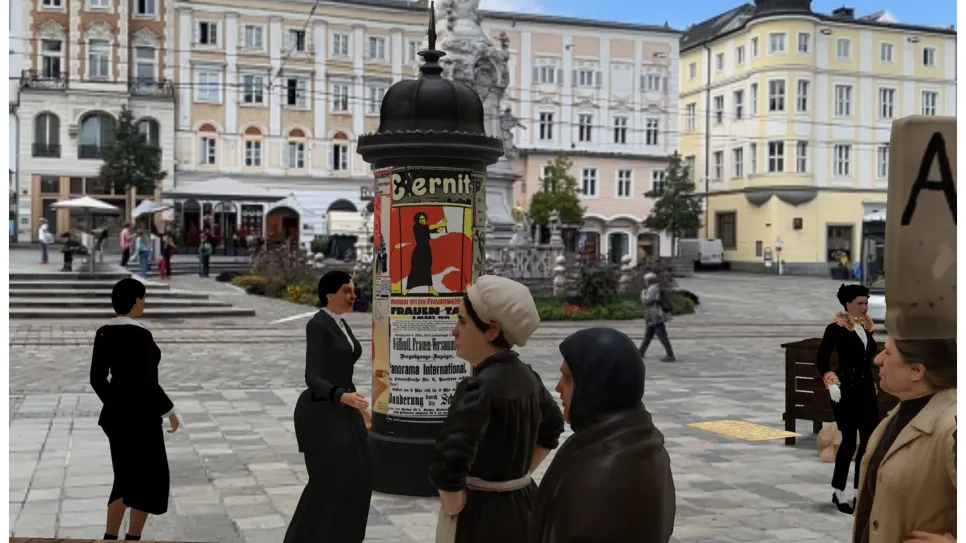
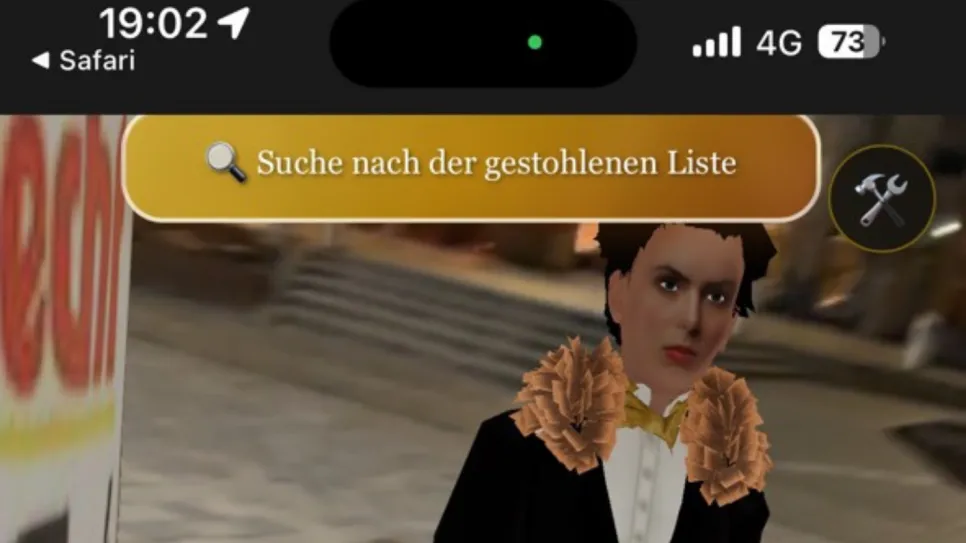
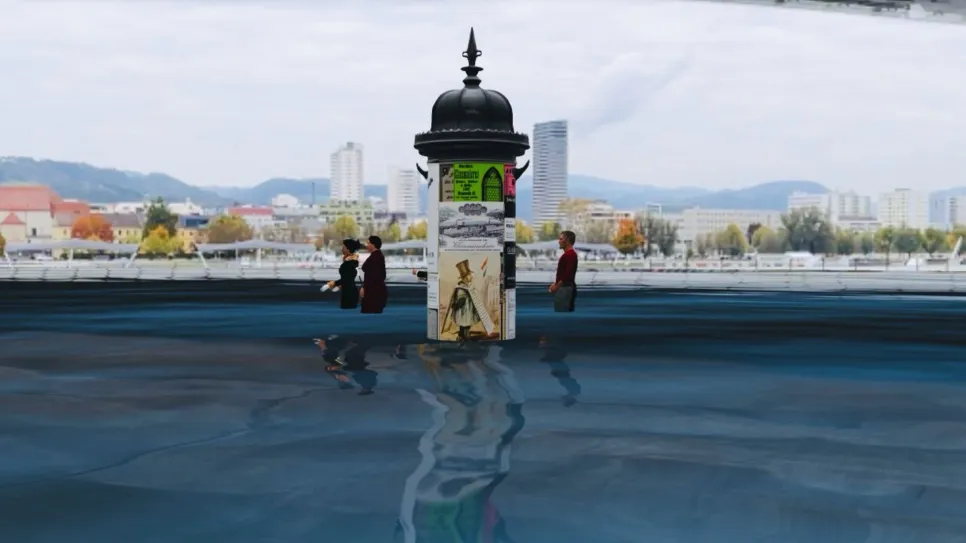
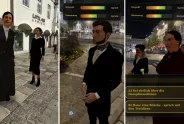
Imagine this: right in the middle of Linz’s main square, a virtual journey through time begins; you are approached by Marie Beutlmayr, Linz’s first female councillor. She urgently needs help: important documents have gone missing. How can you help?
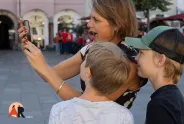
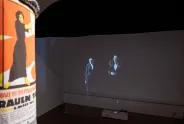
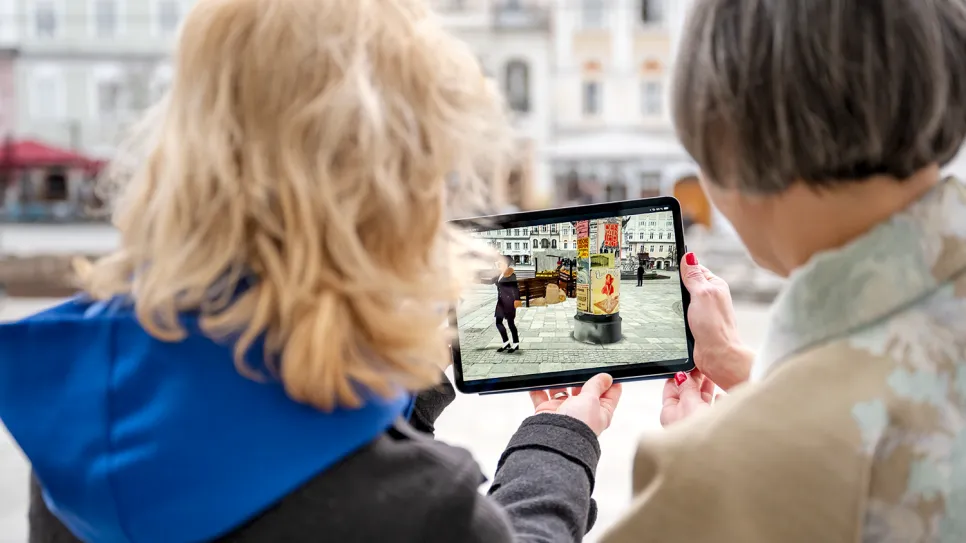
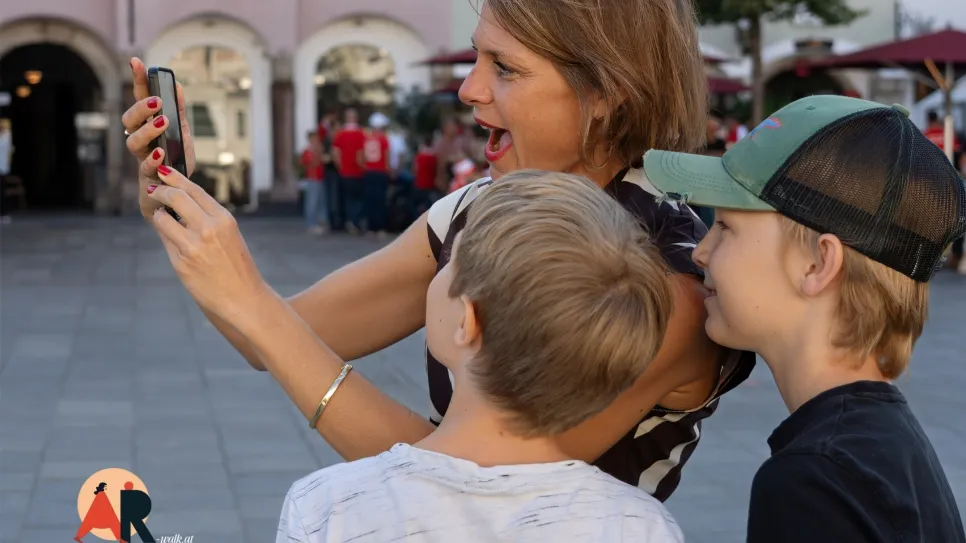
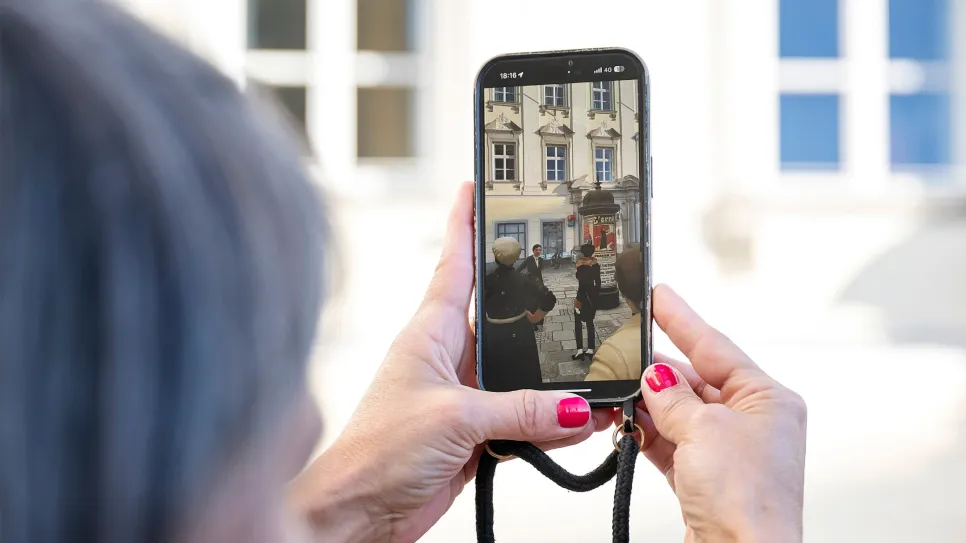
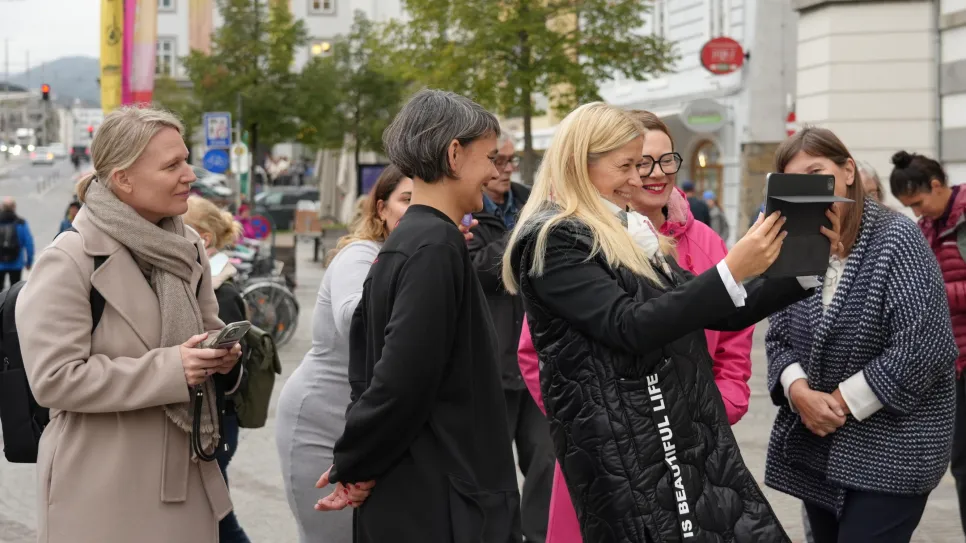
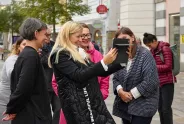
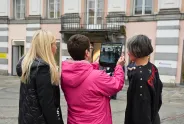
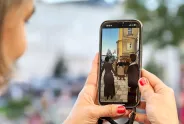
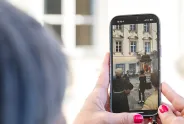
Since October 2025, this scenario has been a reality in Linz: via our smartphones, we encounter women* from Linz from different eras exactly where they once lived and worked. This is made possible by so-called “augmented reality” (AR): the characters appear as digitally generated figures directly in the smartphone’s camera view, thus visibly returning to the public space. This not only changes the way we view the city; the players themselves become part of the narrative, in which the past and the present converge. Augmented Reality thus becomes Augmented Resistance, a defiant city walk in the footsteps of the militant women* of Linz. All you need is a smartphone or tablet with a camera and an internet connection, as well as a modern web browser. No special app is required.
Immersive Narratives and Real Struggles
The original idea behind the development of the underlying game was as follows: A guided walk requires the guide and the participants to be present at a specific location at a fixed time – a game does not. Another initial spark was the global hype surrounding the mobile game “Pokémon GO”: all over the world, people gathered in droves in front of specific buildings and “spots” to find, collect and interact with game characters. Thus the idea was born to make the exploration of women’s history – which in its current form is primarily practised by a generation over the age of 30 – accessible across generations to a younger audience as well.
“WebAR, Three.js, Babylon and the latest AI developments have helped ensure that the vision for this game could finally be realised in 2025. It is about far more than mere visualisation: Players also share the experiences and lived worlds of the protagonists depicted, follow clues and must solve problems. The city itself becomes a museum that is open 24/7,", explain Oona Valarie and Ufuk Serbest, who developed the game for FIFTITU%.
Urban space as an immersive archive
Exploring the women’s stories of Linz leads to specific locations determined by their biographies – the kitchen assistant, for example, leads to the hotel, the shipbuilder to the Danube, and the local councillor to the town hall. Games have their own rules regarding locations: whilst the biographical settings are scattered across the city, Linz’s main square and the city centre form the central starting point. This is where different lives, events and eras converge. Players are immediately immersed and experience history and stories, such as: On 12 October 1915 – three years before women’s suffrage came into force – Marie Beutl-mayr mobilised around 1,000 women for a demonstration on Franz-Joseph-Platz, now Linz’s main square, thereby sparking a small political revolution.
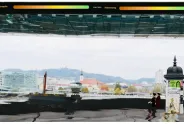
Didn’t you know that? With the AR Walk, FIFTITU% aims to fill gaps in knowledge like this in Linz’s city history. Such as that of Maria Lüftenegger (1784–1850), Linz’s first female shipmaster, a successful entrepreneur and a pioneering visionary. Linz’s Lüfteneggerstraße is named after her, though she went down in history as the “Mother of the Poor”. Yet Maria Lüftenegger was much more than a charitable widow. It is precisely such historical ambiguities that the AR Walk explores.
How it works
- Find the starting point: Stand on Linz’s main square (Marie Beutlmayr) or in front of the Lentos Art Museum (Maria Lüftenegger)
- Visit the website: Open https://ar-walk.at
- on your smartphone: To play the game, please allow access to your camera and location
- Start the level: Position the AR scene in a safe place with an area of approximately 10 x 10 metres. Please ensure you keep a safe distance from the road and watch out for traffic. Children should therefore be accompanied.
- Position: Align the AR elements you see on your smartphone horizontally.
- Interact: Try to make contact with the game characters and listen to them to find clues in the game.
Duration: Approx. 10–15 minutes per station
Availability: 24/7
Currently playable levels:
- Linz Main Square (Marie Beutlmayr)
- Lentos Art Museum (Maria Lüftenegger)
More at: https://ar-walk.at
 ,
,  ,
,  ,
,  ,
,  ,
,  ,
,